


How to Choose the Best Building Supplies for Your Renovation
Are you planning a renovation but feeling overwhelmed by the sheer number of building materials available? Wondering where to start when it comes to sourcing quality supplies in Melbourne? Perhaps you're asking yourself whether it's worth splashing out on premium materials or if budget options will do the job just as well?
Choosing the right building supplies can make or break your renovation project. Whether you're updating a single room or tackling a complete home transformation, the materials you select will determine everything from the durability of your finished work to how much you'll spend along the way. In Melbourne, you've got plenty of options when it comes to building supply stores, but knowing what to look for is half the battle.
In this guide, we'll walk you through everything you need to know about selecting building supplies for your Melbourne renovation. From understanding your project requirements to finding quality materials at fair prices, we've got you covered. You'll learn how to spot inferior products, work effectively with suppliers, and even discover eco-friendly alternatives that won't harm your budget. Let's get stuck into it.
Understanding Your Renovation Project Requirements
Before you set foot in a building supply store, you need a clear picture of what your renovation actually involves. This means taking stock of the work ahead and planning accordingly.
Assessing the Scope of Your Renovation
Start by walking through your space and identifying exactly what needs doing. Are you looking at cosmetic updates like fresh paint and new flooring? Or does your project involve structural changes such as removing walls or adding extensions? The scope of your work directly influences the types and quantities of materials you'll need.
Consider creating a room-by-room breakdown of tasks. This helps you visualise the project as manageable chunks rather than one overwhelming job. It also makes it easier to prioritise tasks and budget for materials in stages if needed.
Creating a Comprehensive Materials List
Once you understand your project scope, put together a detailed materials list. This should include everything from major items like timber and plasterboard down to smaller essentials like screws, adhesives, and sealants.
Don't forget to factor in waste. Most renovation projects require ordering 10-15% extra materials to account for cuts, mistakes, and unexpected issues. Running short mid-project often means delays and additional delivery costs.
What Building Supplies Do I Need for a Home Renovation?
The supplies you need depend entirely on your project type. A bathroom renovation typically requires waterproofing membranes, tiles, plumbing fittings, and moisture-resistant plasterboard. Kitchen updates might call for cabinetry materials, benchtops, splashback tiles, and electrical supplies. General room renovations usually involve plasterboard, paint, flooring, and trim materials.
Types of Building Supplies for Different Renovation Projects
Different renovation projects call for different materials. Understanding your options helps you make informed choices.
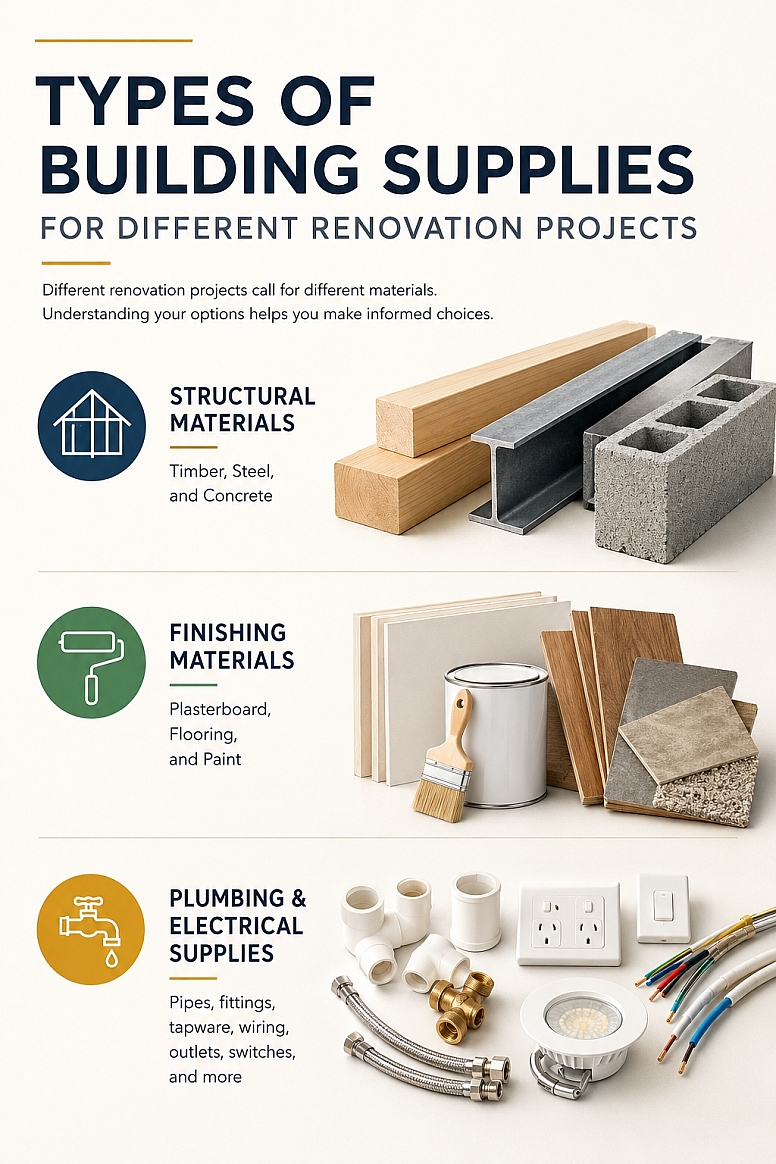
Structural Materials: Timber, Steel, and Concrete
For structural work, you'll typically choose between timber framing, steel, or concrete products. Australian homes commonly use timber framing due to its versatility and ease of use. Steel offers superior strength for larger spans and load-bearing applications. Concrete blocks and products provide excellent thermal mass, particularly useful in Melbourne's variable climate.
Finishing Materials: Plasterboard, Flooring, and Paint
Finishing materials transform bare bones into liveable spaces. Plasterboard comes in various types, including standard, moisture-resistant, and fire-rated options. Flooring choices range from timber and laminate to tiles and carpet. Paint selection should consider durability, finish type, and the specific room conditions.
Plumbing and Electrical Supplies
These specialist materials often require licensed tradespeople to install. However, understanding what's needed helps you budget accurately. Plumbing supplies include pipes, fittings, tapware, and fixtures. Electrical supplies encompass wiring, outlets, switches, and light fittings.
What Are the Most Common Building Materials Used in Australian Homes?
Australian homes typically feature timber or steel framing, brick veneer or weatherboard cladding, concrete slab foundations, and terracotta or metal roofing. Internally, plasterboard walls, timber or tile flooring, and standard electrical and plumbing systems are most common.
How to Find Quality Building Supplies in Melbourne
Melbourne offers numerous options for sourcing building materials, from large chain stores to specialist trade suppliers.
Comparing Building Supply Stores in Melbourne
Take time to compare several suppliers before committing. Look at product range, pricing, customer service quality, and delivery options. Some stores specialise in particular materials while others offer comprehensive one-stop shopping. Reading online reviews from other renovators can provide valuable insights.
Trade Suppliers vs. Retail Hardware Stores
Trade suppliers typically offer better pricing and a wider selection of professional-grade materials. However, they may have minimum order requirements or trade-only access. Retail hardware stores like Bunnings provide convenience and accessibility, but sometimes at higher prices for comparable products.
Building relationships with trade suppliers can pay dividends through trade accounts, bulk discounts, and priority service during busy periods.
Where Can I Buy Cheap Building Supplies in Melbourne?
Finding affordable supplies doesn't mean compromising on quality. Consider salvage yards and recycling centres for reclaimed materials. Factory seconds and clearance sales offer discounted products with minor cosmetic imperfections. Online marketplaces sometimes feature surplus materials from completed projects at reduced prices.
Evaluating Building Material Quality
Not all building supplies are created equal. Knowing how to assess quality protects your investment.
How Do I Know If Building Materials Are Good Quality?
Quality materials typically feel substantial, show consistent colouring and finish, and come from reputable manufacturers. Check for proper labelling, including Australian Standards compliance marks. Avoid products with visible defects, inconsistent dimensions, or missing documentation.
Understanding Australian Building Standards and Certifications
Australian building materials must meet specific standards depending on their application. Look for the CoreMark certification or Watermark for plumbing products. Structural timber should be graded and stamped. Electrical products need proper safety approvals. These certifications confirm products meet minimum safety and performance requirements.
Spotting Inferior Products Before You Buy
Warning signs include suspiciously low prices, unclear origin or manufacturer information, poor packaging, and missing certification marks. If something seems too good to be true, it probably is. Inferior materials may fail prematurely, void insurance coverage, or create safety hazards.
Budget Considerations for Your Renovation Supplies
Smart budgeting ensures your renovation stays on track financially.
How Much Should I Budget for Building Supplies?
Materials typically represent 40-60% of total renovation costs, depending on project type. Kitchen and bathroom renovations tend toward the higher end due to specialist fixtures and fittings. Simple cosmetic updates might sit at the lower end.
Get multiple quotes for major material purchases and build a contingency of 15-20% into your budget for unexpected expenses.
Cost-Saving Tips Without Compromising Quality
Focus spending on areas that matter most—structural integrity and high-traffic surfaces deserve quality materials. Save on areas hidden from view or easily updated later. Consider alternative materials that offer similar performance at lower cost, such as engineered timber instead of solid hardwood.
Bulk Buying vs. Buying As You Go
Bulk buying typically offers cost savings but requires upfront capital and storage space. Buying as you go provides flexibility but may cost more overall. For large renovations, ordering major materials in bulk while purchasing consumables as needed often strikes the right balance.
Sustainable and Eco-Friendly Building Supplies
Environmental considerations increasingly influence material choices for Melbourne renovators.
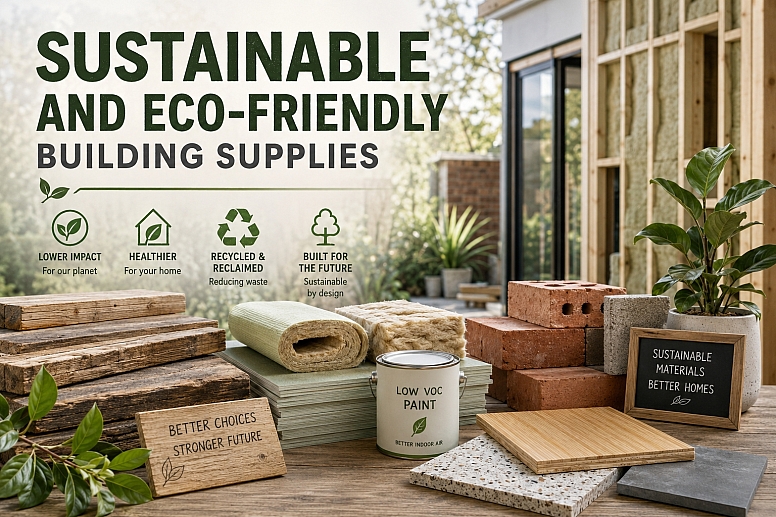
What Are the Best Eco-Friendly Building Materials in Australia?
Sustainable options include FSC-certified timber, recycled steel, low-VOC paints, and natural insulation materials like wool or cellulose. Bamboo flooring offers rapid renewability. Recycled glass countertops and reclaimed timber add character while reducing environmental impact.
Recycled and Reclaimed Materials for Melbourne Renovations
Melbourne has several outlets specialising in salvaged building materials. Reclaimed timber, vintage fixtures, and architectural salvage can add unique character to renovations while keeping materials from landfill. Plus, older materials often feature superior quality compared to modern equivalents.
Working with Suppliers: What to Expect
Building good relationships with suppliers makes your renovation smoother.
Questions to Ask Your Building Supply Merchant
Ask about product warranties, return policies, and technical support. Enquire about delivery timeframes and whether partial deliveries are possible. Find out if they offer project planning assistance or material estimation services. Understanding payment terms helps with cash flow management.
Delivery Options and Lead Times in Melbourne
Most Melbourne suppliers offer delivery services, though costs and timeframes vary. Standard items might arrive within days, while specialty products could take weeks. Plan your project timeline around material availability, particularly for imported items or custom orders.
Can Building Suppliers Help with Project Planning?
Many suppliers offer free take-off services, calculating material quantities from your plans. Some provide design consultation or connect you with recommended tradespersons. Taking advantage of these services can save time and prevent costly ordering errors.
Common Mistakes to Avoid When Buying Building Supplies
Steer clear of these pitfalls: underestimating quantities, choosing price over quality for critical materials, failing to check returns policies, and not confirming delivery dates before scheduling trades. Also, avoid buying materials without proper storage arrangements; weather-damaged supplies waste money and cause delays.
Making Confident Choices for Your Melbourne Renovation
Selecting the right building supplies doesn't need to be stressful. With careful planning, thorough research, and realistic budgeting, you can source quality materials that deliver lasting results without breaking the bank.
Remember, the cheapest option isn't always the best value. Consider the full picture—durability, performance, warranty coverage, and long-term maintenance requirements all factor into true cost. Building supplies from Melbourne suppliers can vary significantly in quality, so take time to compare options.
Your renovation represents a significant investment in your home's comfort, functionality, and value. By following the guidance in this article, you're well-equipped to make informed decisions that you'll be happy with for years to come. Now get planning, start comparing suppliers, and make your renovation vision a reality. Good luck with your project!
Categories
Recent Posts









0.0395