
Notable French Builders: Profiles from Eiffel to Bouygues
Significant French builders, individuals and firms who have shaped the country's built environment. Join us as we focus on those responsible for the physical construction of major works, from medieval cathedrals to modern infrastructure. Each profile details the period, key projects, and specific contributions that define their legacy.
Quick Reference:
- Colonel François-Michel Leprêtre (1895-1973): Founder of Bouygues, a global construction and media conglomerate.
- Gustave Eiffel (1832-1923): Civil engineer and builder famous for metal structures, most notably the Eiffel Tower.
- Bernard & Francis Bouygues: Second-generation leaders who dramatically expanded the Bouygues Group internationally.
- Jean-François Roverato: Founder of Eiffage, France's third major construction group, notable for public-private partnerships.
- Eugène Freyssinet (1879-1962): Civil engineer who pioneered pre-stressed concrete, a fundamental modern technique.
- Pierre & Martin Bouygues: Current leaders of the Bouygues Group, steering it into telecommunications and media.
- VINCI (Founded 1899 as SGE): The world's largest construction company by revenue, formed from the merger of many historic firms.
- Medieval Master Masons (e.g., Jean de Chelles, Pierre de Montreuil): The builders of France's Gothic cathedrals, combining engineering with artistry.
Key Individual Builders and Engineers
These individuals were innovators whose personal expertise and vision drove the creation of landmark structures.
Gustave Eiffel (1832-1923)
- Era: Late 19th to early 20th century.
- Profession: Civil Engineer, Metallurgist, Builder.
- Key Projects: The Eiffel Tower (1889), the metal framework for the Statue of Liberty (1886), the Garabit Viaduct (1884), and numerous railway bridges.
- Profile: Eiffel was a master of structural ironwork. His company, Eiffel et Cie, specialised in designing and building large metal structures. His work is defined by a combination of precise engineering calculation, elegant form, and efficient fabrication. The Eiffel Tower was initially a temporary exhibit for the 1889 Exposition Universelle but became a permanent symbol of Paris and French industrial prowess. He later pioneered early aerodynamics research.
Eugène Freyssinet (1879-1962)
- Era: Early to mid-20th century.
- Profession: Civil Engineer, Innovator.
- Key Projects: The airship hangars at Orly Airport (1923), the Plougastel Bridge (1930), and the rehabilitation of the Le Havre maritime station.
- Profile: Freyssinet was one of the most important concrete engineers in history. He did not just use concrete; he transformed it. In the 1920s, he invented and perfected the method of pre-stressed concrete. This technique uses tensioned steel cables to put the concrete under permanent compression, making it far stronger and able to span longer distances with less material. Almost all modern concrete bridges and large structures rely on his principle.
Jean-François Roverato (1945-)
- Era: Late 20th to early 21st century.
- Profession: Entrepreneur, Corporate Builder.
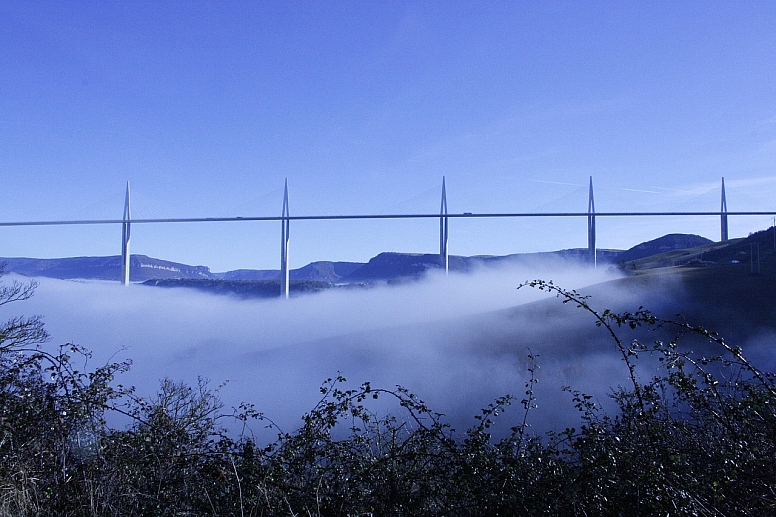
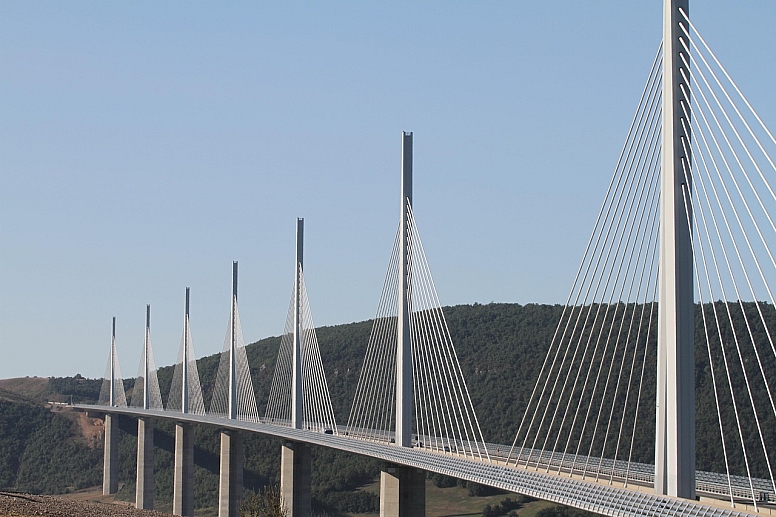
- Key Projects: Founded the Eiffage group. Under his leadership, the company built the Millau Viaduct and became a leader in concession projects (toll roads, bridges).
- Profile: Roverato represents the modern builder-as-CEO. He founded Eiffage in 1993 through the merger of several older companies. His strategic insight was to heavily integrate construction with concession operations (building and then operating infrastructure for decades). This model financed and delivered the spectacular Millau Viaduct, the world's tallest bridge at the time. He built a corporate empire from the ground up.
Medieval Master Masons
- Era: 12th to 16th centuries.
- Examples: Jean de Chelles (Notre-Dame de Paris, 13th century), Pierre de Montreuil (Notre-Dame's transepts, Sainte-Chapelle), Robert de Luzarches (Amiens Cathedral).
- Profile: In the Gothic era, the "master mason" was both architect, structural engineer, and builder. He designed the cathedral, managed the quarrying of stone, directed hundreds of craftsmen, and solved unprecedented engineering challenges like raising vaults to great heights. Their legacy is anonymous in many cases, but some names survive through records. Their profound innovation was the systematic use of the pointed arch, rib vault, and flying buttress to create stone skeletons filled with glass, allowing for the construction of luminous, towering cathedrals like Chartres, Reims, and Bourges.
Major French Construction Firms and Their Founders
Modern French construction is dominated by a few global giants, each with a distinct founding story and evolution.
VINCI
- Founded: Origins trace to Société Générale d'Entreprises (SGE), founded in 1899 by Alexandre Giros and Louis Loucheur. The modern VINCI was formed in 2000 from the merger of SGE and GTM (founded in 1844).
- Key Projects: The Stade de France, the Millau Viaduct (as part of the Eiffage consortium), the Tours Duo in Paris, the LGV high-speed rail network, and managing thousands of miles of toll roads globally via its subsidiary Cofiroute.
- Profile: VINCI is the world's largest construction and concession company by revenue. It is not the product of one individual but a consolidation of France's historic industrial building expertise. Its model is based on two pillars: complex construction projects and long-term concessions (operating airports, motorways, and stadiums). It represents the scale and financial engineering of modern global construction.
Bouygues Group
- Founder: Colonel François-Michel Leprêtre (1895-1973), who founded the company in 1952.
- Key Leaders: His sons, Bernard Bouygues (1922-1993) and Francis Bouygues (1926-1993), who drove massive expansion. Later led by Martin Bouygues (1949-).
- Key Projects: The Parc des Princes stadium, the Qatar National Library, the Stade de France (co-contractor), the Musée du quai Branly, and the Réseau Express Régional (RER) lines in Paris.
- Profile: Founded by a former military officer, Bouygues grew from a small road-building firm into a colossal, diversified conglomerate. Under the Bouygues brothers, it expanded internationally and into media (TF1 television) and telecommunications (Bouygues Telecom). It is known for taking on technically complex "grands projets" and for its fiercely competitive, family-controlled culture. It is a prime example of a builder expanding far beyond construction.
Eiffage
- Founder: Jean-François Roverato, who formed the group in 1993.
- Key Projects: The Millau Viaduct (as lead concessionaire and builder), the Louvre-Lens museum, the Fondation Louis Vuitton building, and numerous motorway and rail concessions.
- Profile: Eiffage is France's third major construction force. Its identity is tightly linked to the concession model, where the company designs, builds, finances, and operates an asset for 20-50 years before transferring it to the state. This requires a different skillset—long-term financing and operational management—compared to pure construction. The Millau Viaduct is its signature achievement, showcasing this integrated approach.
Other Historic Firms (Now Part of Larger Groups)
- GTM (Bâtiments et Travaux Publics): Founded in 1844, merged with SGE to form VINCI. A major contractor for dams, power plants, and industrial works.
- Campenon Bernard: A major post-war construction firm known for large concrete projects. Now part of VINCI.
- Spie Batignolles: Founded in 1846, a major engineering and construction firm. Now part of the multinational group Spie.
- Dumez: A large civil engineering firm, active internationally. Integrated into the Vinci group.
Specialist and Regional Builders
Beyond the national giants, other builders have made significant contributions in specific domains.
Entreprise Bouchayer & Viallet
- Era: Late 19th to mid-20th century.
- Base: Grenoble (French Alps).
- Specialisation: Hydraulic engineering and metal construction.
- Key Projects: Numerous hydroelectric dams and penstocks in the Alps, the metal structure for Grenoble's municipal hall, and industrial installations.
- Profile: This firm was instrumental in harnessing the hydroelectric power of the French Alps, providing the energy that fueled regional industry. They exemplify the specialist industrial builder who masters a specific technology (here, steel water conduits and turbines) critical to a region's development.
The Perret Brothers (Auguste and Gustave Perret)
- Era: Early 20th century.
- Profession: Architects and Builders.
- Key Projects: Théâtre des Champs-Élysées (1913), the Church of Notre-Dame du Raincy (1923), the reconstruction of Le Havre city centre (after 1945, led by Auguste).
- Profile: The Perrets were among the first to fully embrace reinforced concrete as an aesthetic material, not just a structural one. They ran a construction company alongside their architecture practice, giving them total control over the innovative use of concrete. They demonstrated its potential for creating new forms, from theatre interiors to graceful church vaults, influencing modern architecture worldwide.
Charles de Wailly (1730-1798) & Marie-Joseph Peyre (1730-1785)
- Era: 18th Century (Neoclassical).
- Profile: While primarily architects, they were deeply involved in the building process as entrepreneurs. For the Odéon-Théâtre de l'Europe in Paris, they not only designed it but also managed the construction consortium, negotiated with craftsmen, and bore financial risk. This reflects the pre-industrial model where the design professional was also the master builder and project manager.
Frequently Asked Questions
Who actually built the Eiffel Tower? It was built by the construction company of Gustave Eiffel, Eiffel et Cie. The design was engineered by Eiffel's staff, notably Maurice Koechlin and Émile Nouguier. The on-site construction manager was Jean Compagnon. Over 300 workers assembled the 18,038 iron pieces using over 2.5 million rivets.
What is the difference between Vinci, Bouygues, and Eiffage? All are massive construction and concession groups. VINCI is the largest globally, with a huge portfolio of motorway and airport concessions. Bouygues is more diversified into media and telecoms. Eiffage is particularly strong in the concession model for bridges and public buildings, and was built from a strategic merger by its founder.
Who built the Millau Viaduct? It was built by a consortium led by Eiffage. Eiffage holds the 75-year concession to finance, build, and operate the bridge. The detailed engineering design was by the French engineer Michel Virlogeux. The architect was Norman Foster.
Are French builders involved in projects outside France? Extensively. Vinci, Bouygues, and Eiffage are all major international operators. Vinci builds and operates airports worldwide (e.g., Lisbon, Osaka). Bouygues Construction has major projects in Africa, Asia, and the UK. Eiffage works across Europe.
Who were the main builders of the Gothic cathedrals? They were built by generations of anonymous stonemasons, carpenters, and sculptors directed by a Master Mason (Maître d'œuvre). A few names are recorded, like Robert de Luzarches at Amiens or Pierre de Montreuil at Notre-Dame de Paris. The funding often came from the Church and wealthy townspeople, while the labour was provided by skilled guilds.
What is a "Concession" in French building? It is a public-private partnership (PPP) model fundamental to modern French infrastructure. A private consortium (like Eiffage for the Millau Viaduct) finances, builds, and operates the asset (a bridge, motorway, hospital) for a period of 20-75 years, collecting tolls or fees. After the concession period, ownership transfers to the state. This transfers upfront cost and long-term maintenance risk from the public to the private builder-operator.
LEAVE A COMMENT
Categories
Recent Posts


0.044